
Observing Alto Tajo starts with choosing what interests you and spending time in a particular setting. You can plan an outing to explore wildlife, birds or mycology, or focus on the landscape and the sky. A species’ presence in the area does not guarantee that you will see it during a visit: the season, conditions and animal behaviour all change the experience.
Alto Tajo, with its spectacular landscapes, rich biodiversity and peaceful atmosphere, is an ideal destination for nature-watching enthusiasts. Here you can escape the fast pace of everyday life and immerse yourself in the stillness of nature, while enjoying the observation of animals and plants in their most natural state.

The Magic of Large Mammals
Imagine walking along the trails of Alto Tajo at dawn, with birdsong as your soundtrack and fresh air filling your lungs. Suddenly, a majestic red deer crosses your path, its imposing silhouette outlined against the first light of day. This almost fairy-tale scene is just one of many that Alto Tajo can offer nature lovers.
The red deer (Cervus elaphus) is perhaps the most iconic of the park’s inhabitants. Every autumn, during the rut, the males fill the forest with their deep roars, a sound that carries for kilometres and announces the start of the mating season. This natural spectacle is a unique experience that connects visitors with the life cycle of these impressive animals.
Joining the red deer in this forest symphony, fallow deer (Dama dama) contribute their own concert, known as the fallow deer rut, which echoes through the forests at the same time of year.
To plan a guided outing, explore the wildlife watching activities and group options and confirm dates with the organising team.
But Alto Tajo is not all sound and fury. Smaller and more elusive, roe deer (Capreolus capreolus) prefer the tranquillity of forest clearings and open meadows. In spring, their characteristic bark, similar to a dog’s, can be heard as they defend their territory. These graceful, agile animals are a treasure for any wildlife watcher.


Geology
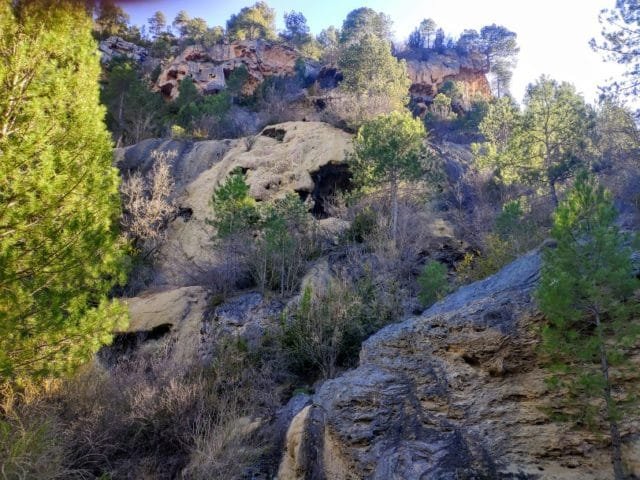
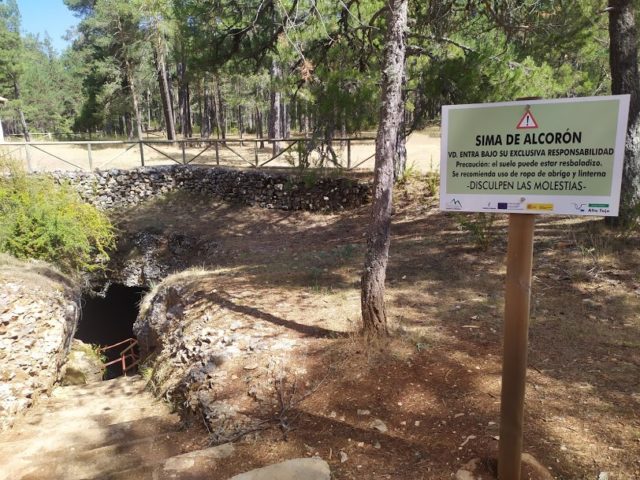
Alto Tajo lies within the Geoparque de la Comarca de Molina-Alto Tajo, an area with exceptional geological heritage. This geopark is home to a wide variety of geological formations that allow us to travel through time and understand the history of the Earth. From impressive gorges carved by the River Tagus to ancient rock formations dating back millions of years, the Geopark offers a unique visual spectacle for geology lovers.
Some of the most important geosites in the Geoparque Molina Alto Tajo are:



Under a blanket of stars: Alto Tajo, an astronomical paradise
But the experience does not end there. Alto Tajo offers the chance to experience astronomy more deeply through specialist companies that will guide you on a cosmic journey through the Cielos de Guadalajara Starlight Reserve:
- Take part in astronomy workshops and courses where you will learn to identify stars, constellations and planets.
- Join guided astronomical observations with experts who will show you the treasures of the night sky through powerful telescopes.
- Enjoy unique experiences such as astrophotography, dinners under the stars or night hikes.
- Or simply visit our viewpoints at dusk and gaze at one of the clearest skies in all of Spain.


Mycology
Changes in woodland, soil and moisture make mycology a way to get to know the area. An outing can focus on observing and photographing fungi or interpreting their relationship with the woodland, without collecting specimens. Their appearance depends on conditions in the field, not a fixed date.
Consult the mycology experience selector to choose your focus and prepare questions about the season and permits. A photograph or a list of species is not enough to decide whether something is safe to eat. If you are looking for a guided activity, confirm what it includes and whether it involves collecting, with what authorisation and where.
Birdwatching
Alto Tajo is a natural refuge for an impressive diversity of birds across its varied ecosystems. This variety of habitats provides an ideal setting for birdwatching, from open spaces and juniper woodland to wetlands and riversides. Below, we explore the main ecosystems of Alto Tajo and the bird species that inhabit them.
Wildlife watching with El Observario
Discover Alto Tajo’s wildlife and landscapes with a local guide. Enquire about a responsible wildlife watching outing or an option tailored to your group, according to the time of year and local conditions.
A Variety of Habitats
Alto Tajo is a natural refuge for an impressive diversity of birds across its varied ecosystems. This variety of habitats provides an ideal setting for birdwatching, from open spaces and juniper woodland to wetlands and riversides. Below, we explore the main ecosystems of Alto Tajo and the bird species that inhabit them.

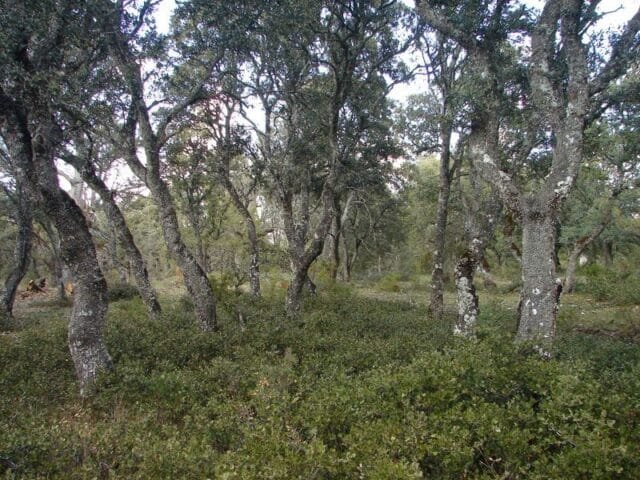
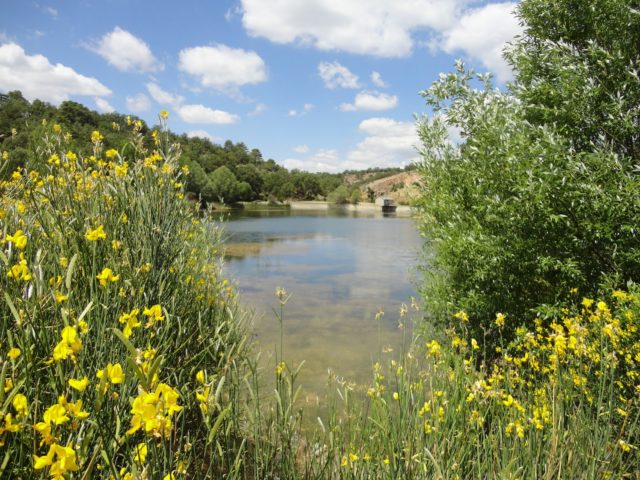

Juniper woodland, scrub and open spaces
Juniper woodland, scrub and open spaces offer different environments from forests and riversides. To plan an outing, first choose the area, season and kind of observation you can do from paths and public access points.
Consult the Molina–Alto Tajo bird guide to distinguish resident, summer and winter species. Not all use the same habitat or are present year-round; a regional list does not predict sightings at every stop.
Rocky cliffs
The cliffs of the gorges are one of the key environments for observing birds of prey. Stay on permitted access routes and watch from a distance, without approaching nests or trying to make the birds fly.
The official park guide documents, among other cliff-dwelling birds of prey, griffon vulture, golden eagle, Bonelli’s eagle, peregrine falcon and Egyptian vulture. Their presence in the park does not guarantee an encounter or mean the same expectations apply at every date or viewpoint.
Forests
Pine, holm oak, oak and juniper woodlands form part of Alto Tajo’s wooded environments. The official guide mentions forest birds such as goshawks, sparrowhawks, crossbills and great spotted woodpeckers. Listening and watching from the path allows you to discover this habitat without chasing animals or using calls.
Wetlands and lagoons
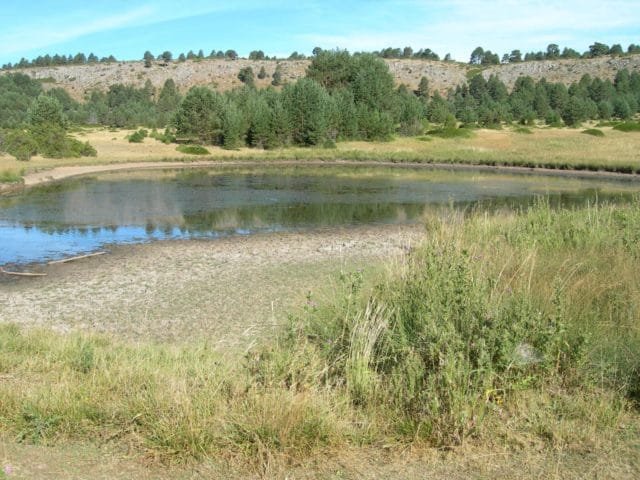
Lagoons and other wetland sites should be considered in light of water levels, the season and permitted access. When looking for waterbirds, check local records and current information about the site; do not assume rare species are present or that every lagoon is a regular breeding site.

Riversides
Along the rivers, water, vegetation and changes between stretches provide different environments to observe. Choose an accessible spot and avoid leaving the trail or entering the riverbed to get closer to a bird.
The Molina–Alto Tajo bird guide lists white-throated dipper, grey wagtail and kingfisher among the area’s species. The chance of seeing them depends on the stretch, conditions and timing; take time to observe without making every species a compulsory target.


Southern Iberian System
The Rewilding Spain Southern Iberian System covers an area larger than the park. The organisation documents natural grazing projects with serrano horses and tauros in Solanillos, Mazarete, and with Przewalski’s horses in Villanueva de Alcorón. These are distinct projects and locations, not a distribution of all these species throughout Alto Tajo.
The project information on horses and tauros explains the use of natural grazing to promote a mosaic landscape. If you want to learn about these projects, enquire about an organised visit and its conditions. Under wildlife watching you can distinguish these experiences from an outing to look for wild animals.


The World of Insects: Beauty in Miniature
Alto Tajo is a paradise not only for mammal and bird lovers, but also for insect and entomology enthusiasts, especially those interested in butterflies. The diversity of plants and flowers thriving in its varied habitats provides the perfect setting for a wide variety of Lepidoptera.
The Spanish Moon Moth: Queen of the Butterflies
The Spanish moon moth, Graellsia isabelae, is a nocturnal moth associated with pine forests. The Castilla-La Mancha environmental publication on Alto Tajo’s geo-routes lists it among the park’s Lepidoptera and associates it with damp Scots pine forests.
Its wings are green, with brownish veins and an eyespot on each wing; the hindwings extend into tails. Its biological description published by the Ministry of Agriculture helps identify these features. It is a nocturnal species. The chance of seeing it depends on the season and local conditions. Observe without capturing or handling specimens.
