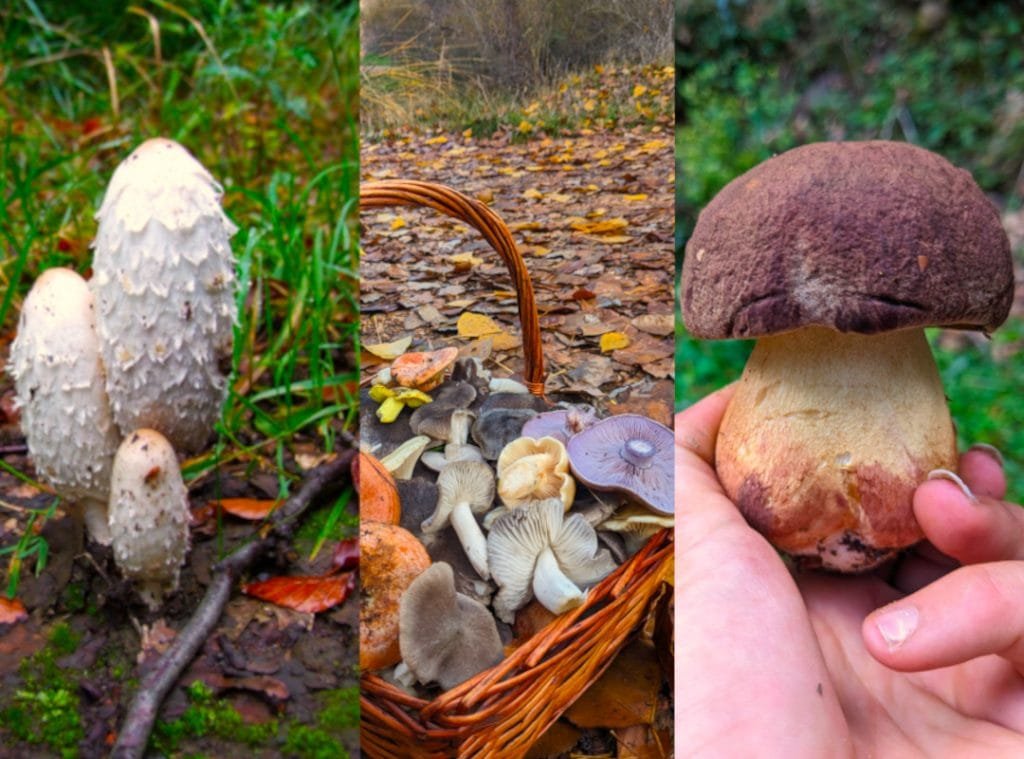
Autumn transforms the Alto Tajo into a mushroom paradise, offering an astonishing variety of edible fungi. From September until the end of November, discover fifteen species that will delight your senses:
Mushroom foraging with a local guide
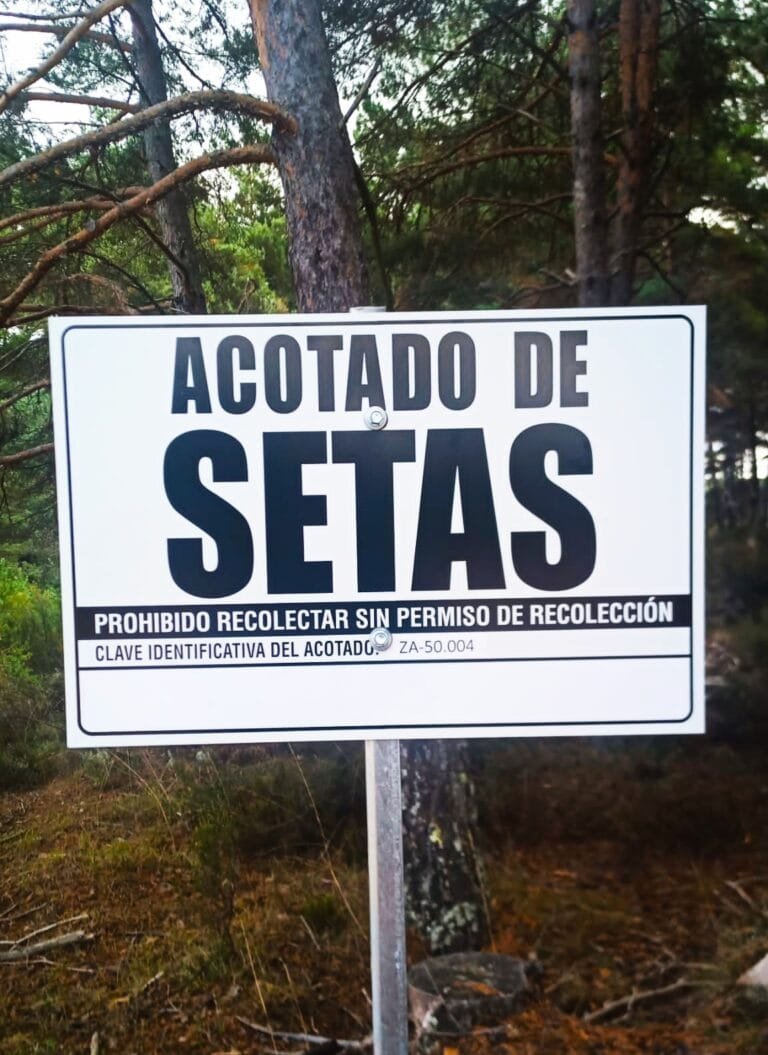
Would you like to learn in the field or plan an outing for your association, local council or group? Our guide to choosing a mushroom outing in the Alto Tajo will help you plan your visit; if you intend to forage, also check the local foraging areas and permits. El Observario organises activities tailored to the group and the season. Alto-tajo.com and El Observario are projects run by the same team.
Photographs and lists are no substitute for expert identification or checking the current foraging rules.
1. Boletes (edulis, aereus, reticulatus and pinophilus)
Boletes are considered the kings of edible mushrooms for their exquisite flavour and versatility in the kitchen. They are excellent fresh or dried and used in a wide range of dishes, from risottos to sauces and side dishes. Pick them carefully without disturbing the soil, to avoid damaging the mycelium.

Appearance: A light to dark brown cap, with a sturdy stem and a characteristic net pattern on the upper part. Size varies by species, but caps can reach up to 25 cm across.
Flavour and aroma: A mild, sweet flavour with a nutty aroma that intensifies when dried. The flesh is white and does not change colour when cut.
Season: September to November, although they may appear from late August in wet years.
Habitat: Coniferous woods (pines and firs) and broadleaf woods (sessile oak, Pyrenean oak, beech and birch), particularly in association with oaks, beeches and pines. They prefer acidic, well-drained soils.
2. Saffron milk caps (Lactarius deliciosus, vinosus, sanguifluus)
Saffron milk caps are highly prized in Mediterranean cooking. Their distinctive flavour makes them ideal for stews, grilling or preserving. Colour alone is not enough to identify a mushroom; species such as the poisonous Lactarius torminosus require a full identification check.

Appearance: An orange cap with darker concentric zones, 5 to 15 cm across. When cut, it exudes an orange or reddish latex characteristic of these species.
Flavour and aroma: A slightly peppery flavour, with a fruity, resinous aroma. The flesh is firm and compact.
Season: October to December, most abundant after the first autumn rains.
Habitat: Pine woods, particularly associated with Scots pines and maritime pines. They prefer calcareous, well-drained soils.
3. Caesar’s mushroom (Amanita caesarea)
Amanita caesarea, also known as “oronja” or “huevo de rey”, has been one of the most prized mushrooms since antiquity. Foraging for it requires experience, as it can be confused with other, poisonous amanitas.

Appearance: A deep orange cap with a yellow stem and ring. The cap can reach 20 cm across and is usually smooth. When young it is enclosed in a white egg-shaped covering (volva), which remains as a sac at the base of the stem. Do not pick it while closed: at that stage it can be confused with deadly Amanita species.
Flavour and aroma: A delicate, mild flavour, with a pleasant aroma faintly reminiscent of fruit. The flesh is white and tender.
Season: September to November, although it may appear earlier in warm, wet years.
Habitat: Holm oak and oak woods, preferably on acidic, well-drained soils.
4. Chanterelles (Cantharellus subpruinosus)
Chanterelles, also known as “cantarelas”, are highly prized in the kitchen for their distinctive flavour and aroma. They are excellent in risottos, sauces, scrambled eggs or simply sautéed with garlic and parsley. Do not confuse them with the poisonous jack-o’-lantern mushroom (Omphalotus olearius). As well as their culinary value, they are rich in vitamin C and beta-carotene. Pick them carefully, cutting the mushroom at the base to avoid damaging the mycelium.

Appearance: Funnel-shaped with wavy edges, cream in colour, ranging from pale yellow to orange. They measure 5 to 12 cm across.
Flavour and aroma: A sweet, aromatic flavour with a hint of apricot. The aroma is fruity and persistent, reminiscent of peaches or apricots.
Season: September to November, although they can be found from late August in wet years.
Habitat: Coniferous and broadleaf woods, particularly in association with oaks, beeches and pines. They prefer acidic, moist soils.
5. Yellowfoot chanterelles (Cantharellus lutescens)
Yellowfoot chanterelles, also known as “yellow trumpets”, are highly prized in cooking for their delicate flavour and distinctive texture. They are excellent in scrambled eggs, stews or as a side dish for meat. Their striking colour can help locate specimens, but identification requires checking all their features.

Appearance: Trumpet-shaped, yellow-orange with darker tones in the centre. The cap can measure 2 to 8 cm across, with a long, hollow stem.
Flavour and aroma: A mild, sweet flavour, with a fruity, slightly peppery aroma. The flesh is thin but firm.
Season: October to December, most abundant in wet years.
Habitat: Coniferous woods, particularly pine woods with acidic, mossy soil. They often grow in large groups.
6. Lepista nuda and personata
Lepista nuda and personata, commonly known as “wood blewit” and “field blewit”, are very versatile mushrooms in the kitchen. Their delicate flavour makes them ideal for stews, sauces or as an accompaniment to meat. Care is needed when foraging, as they can be confused with some poisonous Cortinarius species.

Appearance: A violet cap ranging from pale lilac to dark purple, with a sturdy stem of the same colour. The cap can reach 15 cm across.
Flavour and aroma: A mild, sweet flavour, with a characteristic scent of violets or perfume. The flesh is firm and pale violet.
Season: October to December, although they can be found until early spring in mild areas.
Habitat: Coniferous and broadleaf woods, meadows and gardens. They often grow in circles or “fairy rings”.
7. Llanega negra (Hygrophorus latitabundus)
The llanega negra is highly prized in local cooking. Its firm texture makes it ideal for stews, grilling or preserving. It can be difficult to find because its dark colour camouflages it among the leaf litter on the woodland floor. It is important to clean it well before eating because of its slimy coating.

Appearance: A black, slimy cap with white gills. The cap can measure 5 to 15 cm across, with a sturdy, whitish stem.
Flavour and aroma: A sweet, mild flavour with a pleasant, slightly fruity aroma. The flesh is white and firm.
Season: November to January, making it one of the latest mushrooms of the autumn season.
Habitat: Pine woods, particularly associated with Scots pines and maritime pines. It prefers calcareous, well-drained soils.
8. Copper spike (Chroogomphus rutilus)
The copper spike is an edible mushroom, although not highly prized because of its somewhat slimy texture. However, once properly cleaned and cooked, it can be an interesting ingredient in stews and sauces. Identifying it requires distinguishing it from other species; colour alone does not establish whether it can be eaten.

Appearance: A reddish-orange conical cap, with a yellowish stem that turns orange when touched. The cap can measure 3 to 10 cm across.
Flavour and aroma: A mild, sweet flavour, with a fruity, slightly resinous aroma. The flesh is firm and orange.
Season: October to December, most abundant after autumn rains.
Habitat: Pine woods, particularly associated with Scots pines and maritime pines. It often grows in small groups.
9. Poplar mushroom (Agrocybe aegerita)
The poplar mushroom is highly prized in Mediterranean cooking. Its firm texture makes it ideal breaded, grilled or in stews. It is relatively easy to cultivate, making it a popular choice for commercial production. When gathering it in the wild, reliable identification is essential: poisonous and deadly species, such as Galerina marginata, grow on wood.

Appearance: A light brown cap, with a white stem and ring. The cap can measure 5 to 15 cm across, with a smooth or slightly cracked surface.
Flavour and aroma: A mild flavour, with a nutty aroma and a slight hint of aniseed. The flesh is white and firm.
Season: September to November, although it can be found all year round in mild climates.
Habitat: Trunks of poplars and other broadleaf trees, both living and dead. It can also be cultivated.
10. Field mushroom (Agaricus campestris)
The field mushroom is one of the best-known and most prized mushrooms. Its flavour is stronger than that of cultivated mushrooms, making it ideal for a wide variety of dishes. Care is needed when foraging to avoid confusing it with some poisonous Agaricus species. Very young specimens can be difficult to identify. Also avoid specimens that are damaged or decaying.

Appearance: A white cap with pink gills that turn brown as they mature. The cap can measure 5 to 15 cm across, with a short, sturdy stem.
Flavour and aroma: Mild, sweet flavour with a pleasant aroma. The flesh is white and firm. Do not pick it without expert identification: it can be confused with poisonous Agaricus species and, when young, with deadly white Amanita species.
Season: September to November, although they may appear in spring in wet years.
Habitat: Meadows and pastures, particularly where livestock graze. They often grow in groups or “fairy rings”.
11. Trooping funnels (Clitocybe geotropa)
Clitocybe geotropa, also known as “platera” or “candela”, is a mushroom highly prized in traditional cooking. Its large size and delicate flavour make it ideal for stews, sauces or as a side dish. It is rich in protein and low in calories. Care is needed when foraging to avoid confusing it with other Clitocybe species, which can be poisonous. It is important to cook it thoroughly before eating, as it can cause digestive problems when raw.

Appearance: A funnel-shaped, cream or beige cap that can reach 20 cm across. The stem is sturdy and the same colour as the cap.
Flavour and aroma: A mild, sweet flavour with a pleasant, slightly fruity aroma. The flesh is white and firm.
Season: October to December, most abundant in wet years.
Habitat: Coniferous and broadleaf woods, particularly in clearings and along paths. It can grow on acidic and alkaline soils, although in our area it is more common on the former. It often grows in groups forming “fairy rings”.
12. Fairy ring champignons (Marasmius oreades)
Fairy ring mushrooms, also known in Spanish as “carrerillas” or “setas de corro”, are highly prized in cooking for their delicate flavour and intense aroma. They are excellent dried or fresh, and used in a wide range of dishes, from soups to sauces. Pick them without pulling out the mycelium. Beware: small, poisonous whitish Clitocybe can grow in the same rings.

Appearance: A small, convex, cream or light brown cap, measuring 2 to 5 cm across. The stem is long, slender and fibrous.
Flavour and aroma: A mild, sweet flavour, with a very distinctive almond aroma. The flesh is thin but firm.
Season: September to November, although they can be found from spring to autumn in wet years.
Habitat: Meadows and pastures, particularly areas of short grass. They often grow in groups forming “fairy rings”.
13. Parasol mushroom (Macrolepiota procera)
Also known as apagador, cucurril, parasol, matacandil or galamperna. It is one of the easiest mushrooms to spot because of its large size and popularity. It is highly prized in areas where it is common, as it lends itself to many preparations; the most popular is to use it as a base for a homemade pizza, with surprisingly good results.

Appearance: Large and convex, shaped like an open parasol. It can reach up to 30 cm in diameter. The cuticle is light brown to greyish brown, covered with brown scales that come away easily. The cap margin is slightly striated. Gills free, crowded, white to cream. A slender, cylindrical, hollow stem can reach up to 40 cm tall. Do not pick it without expert identification: there are poisonous and deadly Lepiota species that resemble it, and size is not enough to tell them apart.
Flavour and aroma: A mild, pleasant flavour with a slight nutty note. A delicate, distinctive aroma, similar to hazelnuts or fresh hay.
Season: Mainly July to October, although isolated specimens may appear in spring and autumn.
Habitat: Various habitats: open woods, meadows, roadsides, pastures and grassy areas. They prefer well-drained soils rich in organic matter. They grow both singly and in groups, sometimes forming “fairy rings”.
14. Hedgehog mushroom (Hydnum repandum)
The hedgehog mushroom, also known in Spanish as “gamuza”, is prized for its distinctive texture and delicate flavour. It is excellent in stews, sautéed or as a side dish. Pick it carefully to prevent soil collecting between the spines. It is important to cook it thoroughly, as it can cause stomach irritation in some people when raw.

Appearance: An irregular cream-coloured cap, with spines instead of gills on the underside. It can measure 5 to 15 cm across.
Flavour and aroma: A slightly peppery flavour, with an earthy, mild aroma. The flesh is firm and whitish.
Season: October to December, although it can be found until early spring in mild areas.
Habitat: Coniferous and broadleaf woods, particularly in damp, mossy areas.
15. King oyster mushroom (Pleurotus eryngii)
The king oyster mushroom is highly prized in Mediterranean cooking for its delicate flavour and meaty texture. It is excellent grilled, in stews or stuffed. It is commonly cultivated, making it available all year round. When foraging, it is important to identify it correctly and not confuse it with other species that grow in the same habitat.

Appearance: A convex grey-brown cap, with an off-centre, sturdy stem. It can measure 5 to 15 cm across.
Flavour and aroma: A mild, delicate flavour, with a nutty aroma and a slight hint of aniseed. The flesh is firm and white.
Season: October to December, although cultivated mushrooms can be found all year round.
Habitat: Roots of thistles and other umbellifers, in grasslands and abandoned farmland.
Tips for responsible foraging:
- Respect the environment: Pick only the mushrooms you need and leave the others to continue growing.
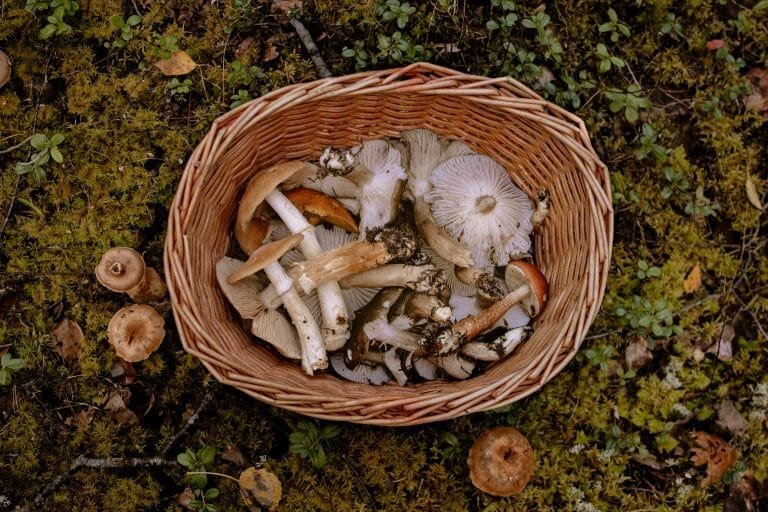
- Use a wicker basket: Mushrooms stay aerated; do not use plastic bags.
- Identify mushrooms correctly: Before picking a mushroom, make sure it is edible. If in doubt, consult an expert.
- Check the current regulations: Each area may have specific rules for mushroom foraging. Check carefully before your trip.
Enjoy autumn and the delicious mushrooms the Alto Tajo has to offer!
Food safety: eat only mushrooms that have been identified with certainty, seeking expert advice when needed. Avoid eating wild mushrooms raw. See the ANSES health recommendations on wild mushrooms.
Read more: Edible spring mushrooms
Would you like to learn to identify mushrooms with a guide? El Observario organises a guided mushroom walk, with mushroom identification in the field and a meal at a restaurant. Dates are confirmed according to conditions in the countryside.