Ancient volcano of Orea
A witness to another time in this landscape
Ancient volcano of Orea
Address
Ancient volcano of Orea
GPS
40.537436322224, -1.7360662316427
Ancient volcano of Orea
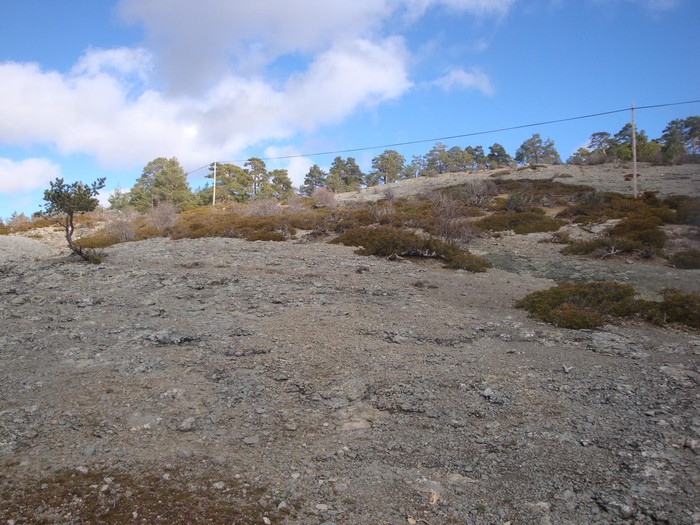
Although it may seem strange and impossible, since we have hardly ever heard of volcanic remains in this area, they do exist. Very close to Orea is an area of rocks that stand out from the landscape and catch the eye.
Around 270 million years ago, this part of the Natural Park lay over a magma chamber which, due to movements in the Earth’s crust, pushed its contents to the surface in two separate eruptions.
These materials produced a group of rocks or minerals known as dacites, whose composition tells us that they were once the product of a volcano. They are volcanic igneous rocks: igneous because they come from magma, and volcanic because the magma cooled and solidified on the surface rather than underground.
They consist mostly of small crystals of minerals such as quartz, feldspars and micas. Their composition is very similar to granite, but their origin differs: granite forms inside the Earth’s crust, where it cools slowly and crystals have time to form. Dacite, however, is lava emitted by a volcano and cools very quickly on the surface, so its crystals are very small.
Geologically speaking, during the Palaeozoic, the Variscan orogeny transformed and folded sedimentary rocks formed beneath the sea, producing the strongly folded quartzites and slates that make up the Sierra de Orea. Later, fractures formed through which magma rose from within the Earth. This began a volcanic episode in which no cone-shaped volcano formed: instead, magma rose to the surface through cracks and fissures and accumulated beside them, producing very localised volcanism.
In total, nearly 250 metres of grey-green conglomerates accumulated at the ancient volcano of Orea. It was not the only place in the region where eruptions occurred: at the same time they also took place in nearby parts of Guadalajara, Cuenca and Teruel.
<< How to get there
This group of dacites, or volcanic minerals, lies in the municipality of Orea, on the road to the campsite. Take the track beside the interpretation centre and continue until the ground on the left suddenly changes, becoming inhospitable and greyish. A sign explains more about this curious outcrop. There is very little parking space, but if you pull over slightly to the side of the track you can examine these dacites and see their main components with the naked eye (black dacites, small quartz crystals and feldspars).
If you are interested in how the area’s different geological landscapes formed, we also recommend Georuta 9, whose stops 7 and 8 take you to this volcano and other places of special geological interest.