Salto de Poveda
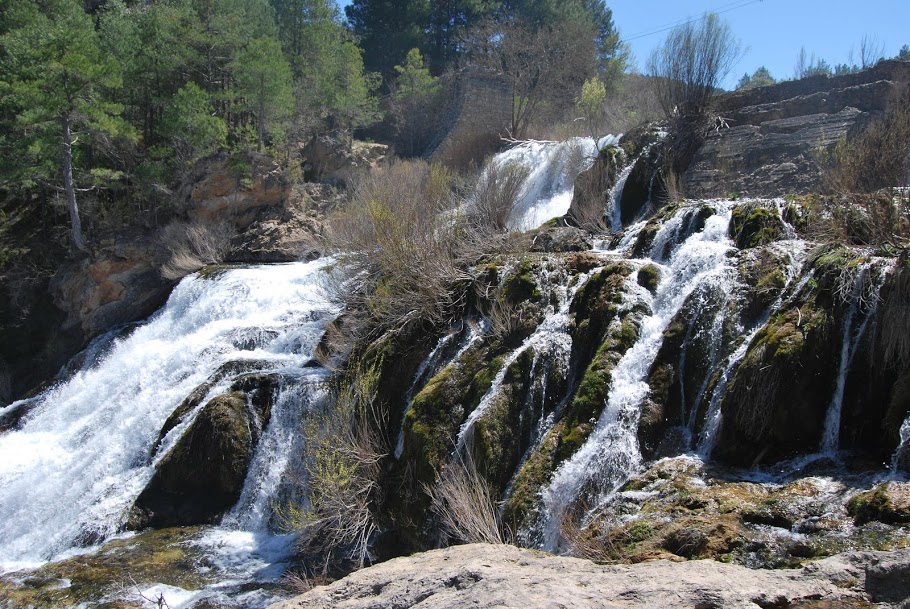
Former waterfall that was never put into operation
Address
Poveda de la Sierra
GPS
40.650063982224, -1.9791872125902
Salto de Poveda
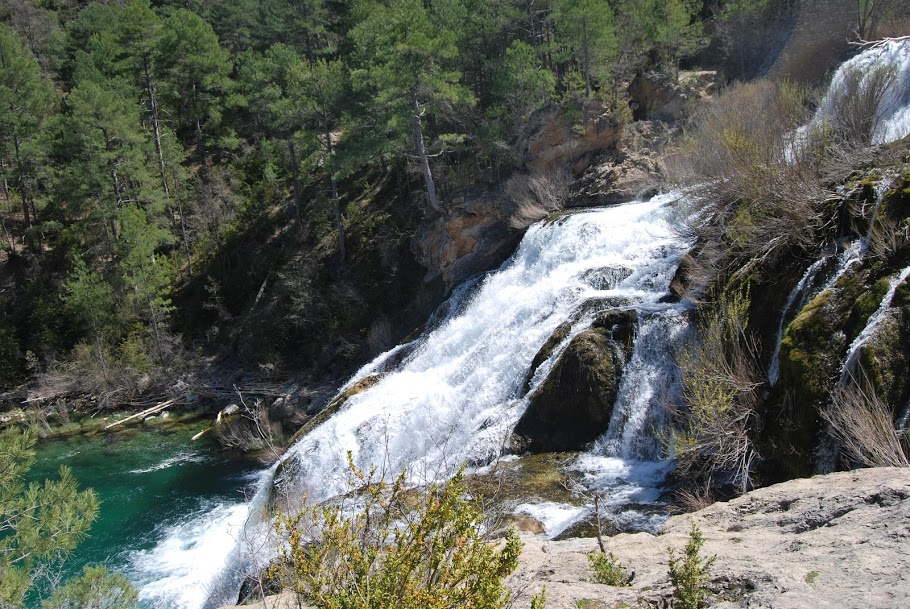
The origins of Salto de Poveda begin with the Chorrera reservoir, a small reservoir on the upper River Tagus. Water was impounded by the Salto de Poveda itself, where a hydroelectric power station was planned to supply local villages. The project had to be abandoned when leaks were detected and was never completed. The dam remained, the leaks grew and the water did the rest. It is now broken and abandoned, but the churning water encourages dissolved calcium carbonate to precipitate, creating a spectacular cascade of tufa, so the River Tagus itself has largely naturalised it.
Remains of many parts of the power station survive today, including the dam, spillways, power lines and staff barracks, now converted into tourist accommodation. Although created by human activity, it is one of the sites on the River Tagus most valued by visitors. It is also the largest waterfall on the upper River Tagus and a place well worth visiting at any time of year.
In the pools downstream and the backwater of Salto de Poveda you can go diving with one of the active tourism companies in the area.


<< How to get there
This is one of the most famous and best-known places in the Alto Tajo and surrounding area, helped by how easy it is to reach this paradise. To get as close as possible by car, take the dirt track that starts beside the Puente de Poveda de la Sierra, right by the information hut. The track leads almost to the waterfall, near the Casas del Salto.
Another option is to follow the trail or geo-route, which reveal this and other spectacular places in the area, such as the nearby Laguna de Taravilla. From the lagoon you can also do the walk in reverse: drive to its car park, descend towards the river, cross the fishermen’s footbridge and follow that section of the trail in reverse to Salto de Poveda.
Read more: Tagus suspension bridge
Would you like to discover Salto de Poveda and Laguna de Taravilla with someone to explain the landscape? El Observario organises a guided interpretive walk visiting both places.