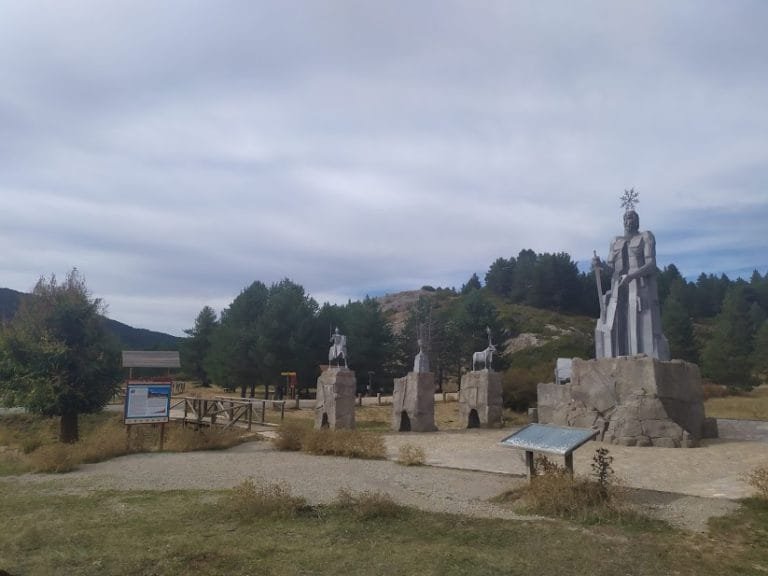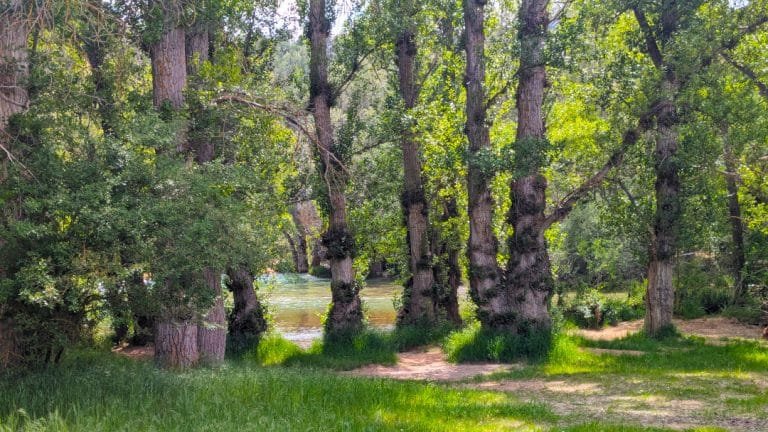
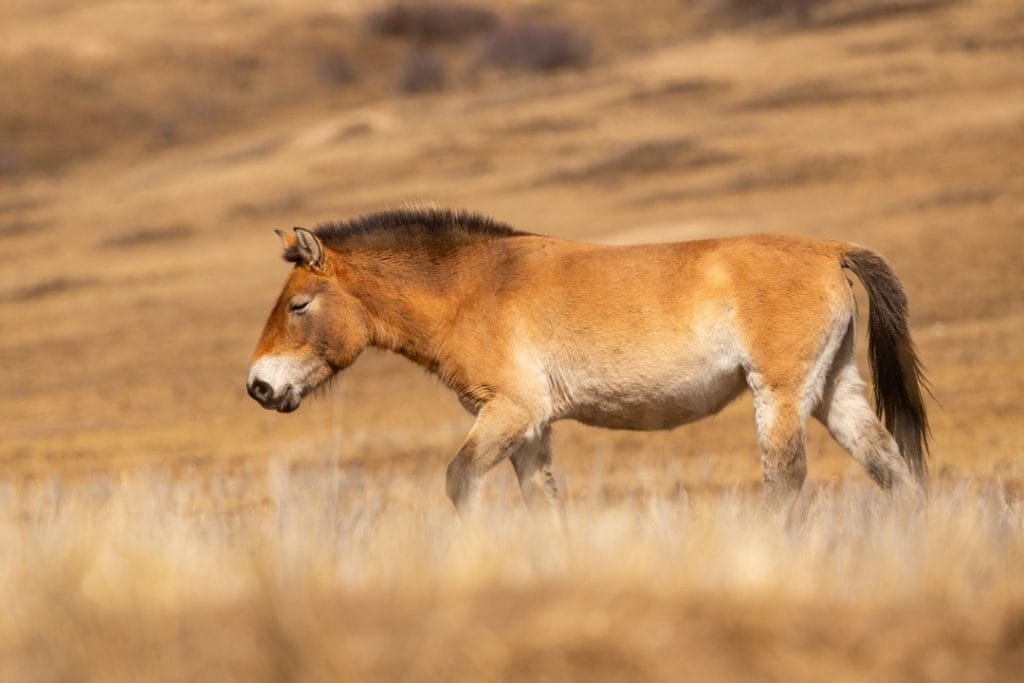
Before seeing a wild horse, you must learn to read a clearing. A gap between the trees, bushes grazed down to the ground, a path through the scrub: all these tell you who has passed through and what they have eaten. Going out to watch large herbivores is, in large part, about looking at the landscape with fresh eyes.

Three projects, three places
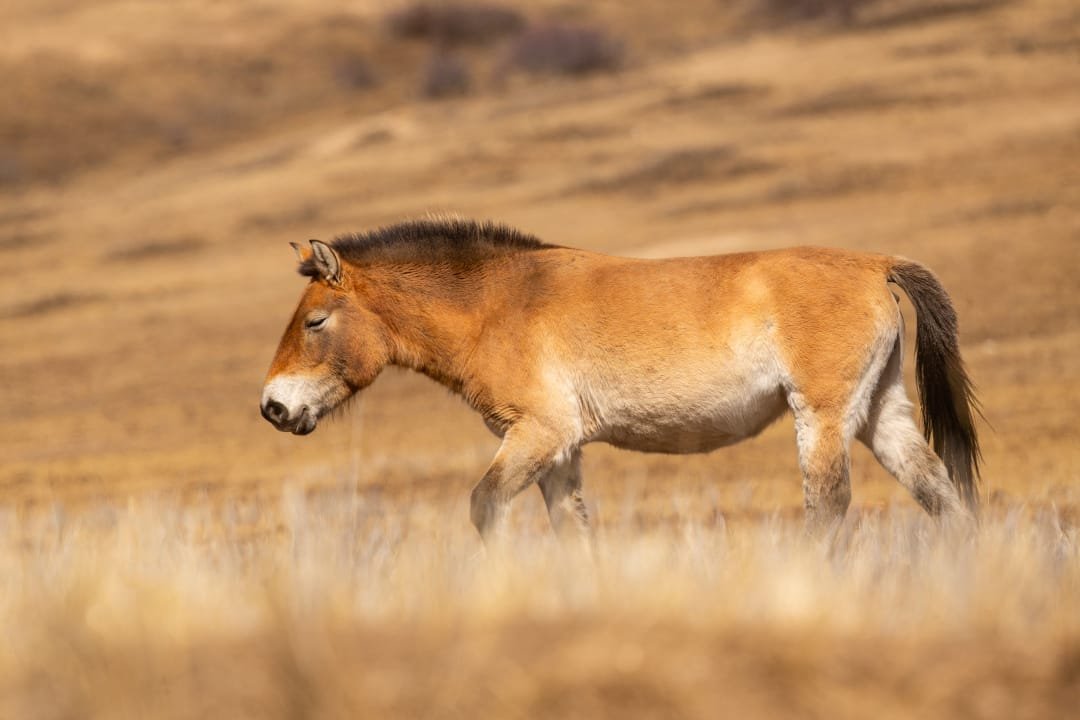
It is important to distinguish them, because they are not all on one route: according to Rewilding Spain, Przewalski’s horses live in Villanueva de Alcorón, European bison in El Recuenco, and serrano horses and tauros in the Dehesa de Solanillos, in Mazarete. Each area has its own visiting conditions, and you cannot travel freely from one to another.
The Przewalski’s horse project in Villanueva was presented in 2023 as a form of natural grazing. It is interesting to understand it alongside the area’s livestock-raising history: extensive livestock farming and rewilding each have their own contexts and management practices.
What to look for
- The alternation of open and wooded areas.
- Which plants the animals eat and which they leave.
- How the group moves and who sets the pace.
- Which signs come from these herbivores and which might come from livestock, other species or forestry work.
One thing should be clear: seeing a clearing does not prove that the woodland is healthier or better protected from fire. Those things are measured through monitoring over time. As the project promoter itself says, its objectives are not results that have already been measured.
A useful tip: take a notebook and separate three things: what you saw, the explanation you were given, and the data that exists. It is simple, works with children and associations, and turns the outing into a little fieldwork.
How to choose your outing
If wild horses appeal to you, see El Observario’s Przewalski’s horse activity; if you prefer bison, try bison watching in El Recuenco. To explore other options, start with the wildlife guide. If you want to combine several areas, ask for a tailor-made proposal: travel and observation time need planning.
Before booking, tell us how many people are coming, their ages, walking pace and whether anyone needs adjustments. Bring binoculars and clothing suited to the day. Do not surround or feed the animals or try to touch them, and follow the guide’s instructions. Adjust the camera to the distance, not the other way around.
More information: Rewilding Spain’s visitor areas and the introduction to the Villanueva de Alcorón project.