
Category: Geological site
This catalogue brings together places to discover the geology of Alto Tajo. Consult the pages for Bosque Fósil, Hundido de Armallones or Sima de Alcorón to plan your visit and learn what makes each place distinctive.

The fossil site at Cuevas Labradas contains Jurassic marine invertebrates, which can be seen in great numbers beneath our feet if we look carefully.
View more
The fossil forest is one of the treasures of the Molina-Alto Tajo Geopark, an area containing fossil conifer trunks from the Palaeozoic Era
View more
These Jurassic layers were deposited beneath a tropical sea that once covered this area and were later folded during the Alpine orogeny in the Tertiary.
View moreThe Fuentelsaz stratotype has been chosen by the IUGS as the globally significant boundary stratotype and point for the base of the Aalenian
View more
The La Tejera experimental area in Checa is devoted to rocks and minerals and displays ten rock types from the Geopark.
View more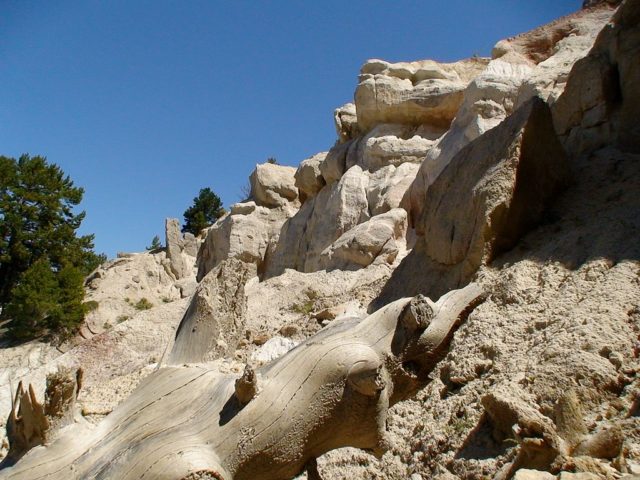
The Terreras de la Virgen, or "Cárcava de Ribagorda", were formed by erosion following deforestation and disturbance of the soil
View more
The ancient volcano of Orea bears witness to volcanoes in this area, although they did not take the form we are used to seeing.
View more
Valle de los Milagros brings together the reddish Linares pinnacles and the area around Los Casares.
View more
Hundido de Armallones is a spectacular rocky escarpment formed when the side of the Tagus canyon collapsed due to an earthquake.
View more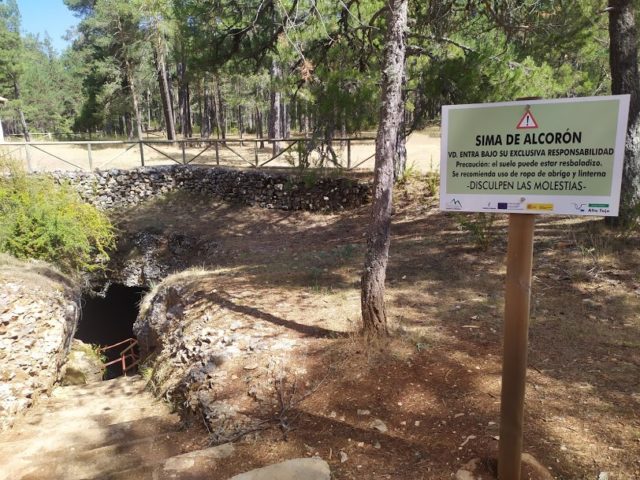
Sima de Alcorón is a 63 m deep natural shaft equipped with steps for visitors, which must be descended with care
View more
Río de Piedras de Orea is an accumulation of thousands of quartzite blocks covering the slope of Cerro de San Cristóbal.
View more
Cueva del Tornero is the deepest cave in Alto Tajo, with more than 11 km, and its end has not yet been reached.
View more
At La Aguaspeña, water really does seem to turn into stone: this waterfall flows all year round and forms a large, growing tufa deposit.
View more
Poljé del Cubillo is a karst depression resembling a long, enclosed, flat-bottomed valley typical of glacial landscapes.
View more
The graptolites of Checa were small marine organisms that lived here approximately 430 million years ago.
View more
The Checa dropstone is a rock that was trapped in a glacier and fell to the seabed after ice broke away and drifted out to sea.
View more
The place known as “Hoya de la Parra” is an abandoned meander of the River Tagus, which can be visited on the Laguna de Taravilla route.
View more